
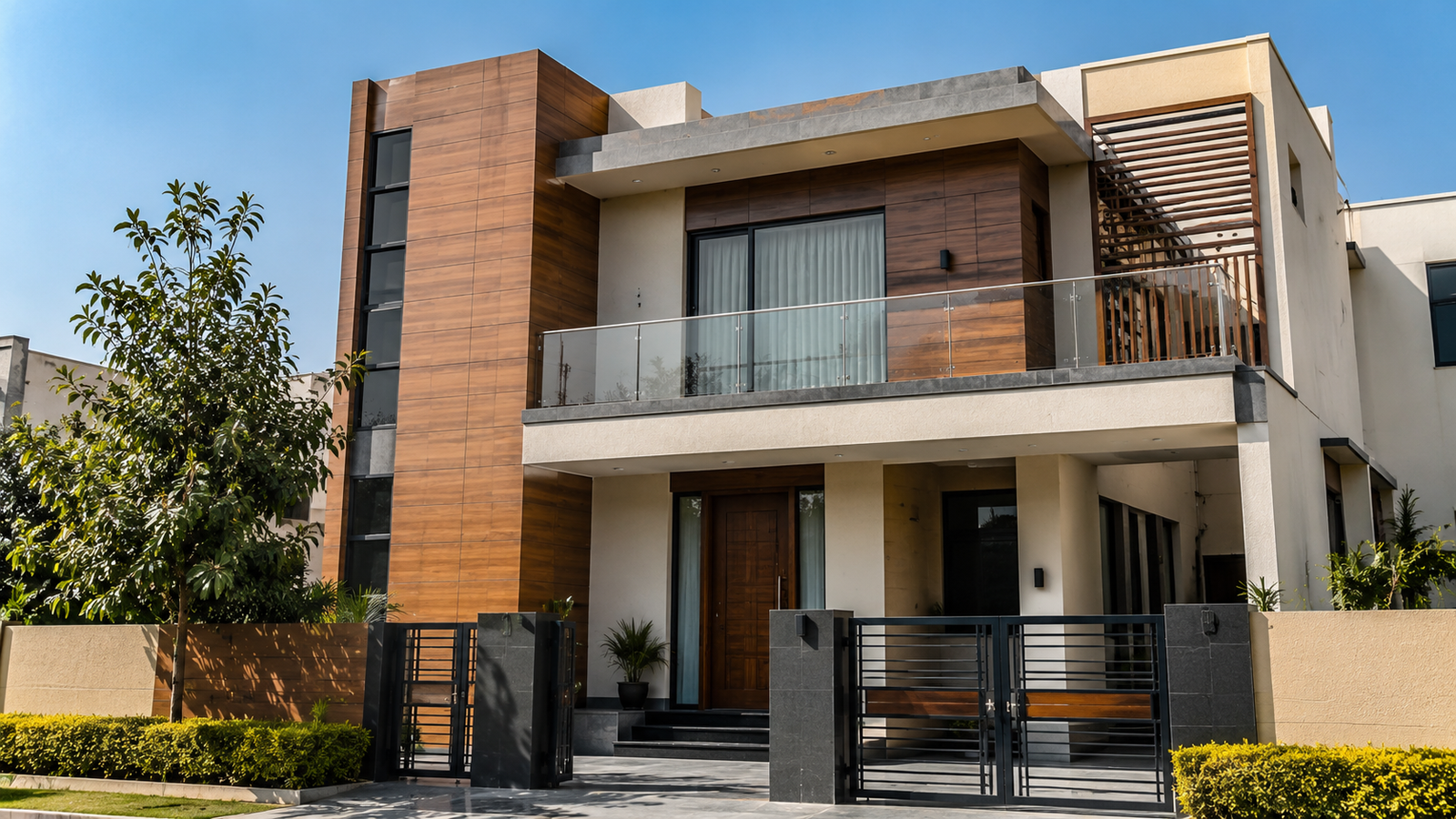
What Is a 6mm Exterior HPL Sheet?
A 6mm exterior HPL sheet is a high-pressure laminate panel manufactured in a thickness of approximately 6 millimetres and intended for suitable exterior architectural applications.
HPL stands for High Pressure Laminate. Unlike thin decorative laminates that are primarily used as surface finishes, thicker HPL panels can be manufactured for architectural applications where the panel itself forms part of the visible cladding system.
For exterior projects, the thickness should never be considered in isolation. The product’s exterior grade, performance characteristics, supporting structure, fixing system and installation method all affect suitability.
At HPLMAKER, 6mm is identified as its most-used and popular HPL sheet thickness. The company also lists standard sizes including 4 × 8 ft, 4 × 10 ft and 5 × 10 ft, along with customization options.
Why Is 6mm HPL Popular for Exterior Applications?
Exterior cladding has to balance several requirements at the same time.
A panel should offer sufficient rigidity for its intended installation while remaining practical to manufacture, transport, cut and install.
The popularity of 6mm exterior HPL comes from this balance.
It is commonly considered for applications such as:
- Exterior wall cladding
- Building facades
- Residential front elevations
- Balcony cladding
- Entrance features
- Architectural accent walls
- Commercial exteriors
However, not every 6mm HPL sheet is automatically suitable for every outdoor environment. Buyers should verify the manufacturer’s stated application and technical specifications before selecting a product.
6mm HPL vs Thinner Decorative Laminates
One of the biggest sources of confusion is treating all HPL as the same material.
Thin HPL products are often used as decorative surfacing materials over another substrate. Exterior architectural panels operate differently because the panel thickness and installation system become part of the facade design.
For example:
| Characteristic | Thin Decorative HPL | 6mm Exterior HPL |
|---|---|---|
| Typical role | Surface finish | Architectural panel/cladding |
| Typical applications | Furniture, cabinetry, interiors | Facades, elevations, exterior walls |
| Structural requirement | Usually relies on substrate | Depends on complete cladding system |
| Outdoor suitability | Product-dependent | Must be specifically exterior-grade |
| Installation | Bonded/laminated to substrate | Mechanical/system-based installation may be used depending on specification |
The important point is that 6mm thickness alone does not make a product exterior-grade.
Where Is 6mm Exterior HPL Used?
1. House Front Elevations
Modern residential facades often combine plaster, glass, stone, metal and wood-look surfaces.
6mm exterior HPL can be used as a feature cladding material to introduce a strong visual element without covering the entire elevation.
Common design locations include:
- Entrance walls
- Balcony bands
- Vertical facade strips
- Porch backgrounds
- Window surrounds
- Feature panels
2. Exterior Wall Cladding
Large exterior walls can look visually flat when finished with a single material.
HPL panels can introduce texture, colour and pattern while creating defined panel lines.
Wood-grain finishes are particularly useful when architects want a warm appearance on a contemporary facade.
3. Commercial Facades
Commercial properties can use exterior HPL for selected facade zones or larger cladding areas.
Potential applications include:
- Offices
- Retail stores
- Restaurants
- Hotels
- Showrooms
- Institutional buildings
For large commercial projects, wind loads, panel dimensions, supporting structure and fixing details should be reviewed by the project team.
4. Balcony and Terrace Features
A balcony can become a major architectural element rather than simply a functional space.
HPL can be introduced on selected walls, soffits or architectural sections where the product specification allows the proposed application.
5. Entrance and Gate Areas
HPL can also be used to create a coordinated visual language around entrances and architectural feature zones.
The selected finish can be matched with the building’s doors, windows, flooring and exterior paint.
What Size Does a 6mm HPL Sheet Come In?
HPLMAKER lists the following commonly available sizes:
- 4 × 8 ft (1220 × 2440 mm)
- 4 × 10 ft (1220 × 3050 mm)
- 5 × 10 ft (1525 × 3050 mm)
The company also states that customized sizes can be produced depending on project requirements.
For exterior projects, sheet dimensions affect:
- Panel layout
- Number of joints
- Material wastage
- Handling
- Cutting requirements
- Installation planning
Therefore, the biggest available sheet is not automatically the most economical choice.
How Much Does a 6mm Exterior HPL Sheet Cost?
There is no single universal 6mm HPL price.
The final cost can vary according to:
- Brand
- Exterior-grade specification
- Finish
- Design
- Sheet size
- Quantity
- Customization
- Transportation
- Project location
For an actual project budget, calculate the complete installed system rather than looking only at the sheet’s per-square-foot price.
What Should You Check Before Buying 6mm Exterior HPL?
Check 1: Exterior Grade
Confirm that the exact product is intended for outdoor architectural use.
Do not assume that a sheet is suitable for exterior use simply because it is 6mm thick.
Check 2: Weather Performance
Ask for the manufacturer’s technical information regarding the intended environment.
Important considerations may include:
- UV exposure
- Rain
- Humidity
- Temperature variation
- Surface durability
- Colour stability
Check 3: Installation System
The panel and installation system should be considered together.
Depending on the facade design, the system may involve a supporting framework, mechanical fasteners, ventilation space and specific joint details.
Check 4: Sheet Dimensions
Larger sheets may reduce visible joints but can also create handling and installation challenges.
Check 5: Surface Finish
Always inspect an actual sample where possible.
A finish that looks attractive on a small screen can appear very different across a large facade.
Check 6: Warranty and Documentation
Ask for applicable warranty terms and technical documentation before making a large purchase.
Check 7: Installation Expertise
A quality panel can still perform poorly when installed incorrectly.
Use an installer familiar with the manufacturer’s recommended exterior installation system.
Does 6mm Mean the Sheet Is Structurally Stronger?
Increasing thickness generally changes the stiffness and handling characteristics of a panel, but thickness should not be interpreted as a standalone structural rating.
The performance of an exterior facade depends on the entire system:
Panel + support structure + fixing method + joints + building substrate + environmental loads
This is particularly important for large facade surfaces exposed to wind.
Therefore, project-specific engineering requirements should be evaluated before installation.
How Is 6mm Exterior HPL Installed?
Exterior HPL installation depends on the specific product and facade system.
The installer generally needs to consider:
- Wall/substrate condition
- Supporting structure
- Panel dimensions
- Joint spacing
- Fixing method
- Ventilation and drainage
- Thermal movement
- Edge treatment
- Panel alignment
- Access for maintenance
The exact details should follow the manufacturer’s installation recommendations.
Avoid treating exterior HPL like a conventional interior laminate and applying an improvised installation method.
What Finishes Can You Choose in 6mm HPL?
One reason 6mm exterior HPL is popular in architectural design is the variety of visual finishes.
Depending on the collection, options can include:
Wood Finishes
Useful for creating a warm natural appearance on modern facades.
Stone-Inspired Finishes
Suitable when the design requires a heavier architectural aesthetic.
Solid Colours
Useful for clean contemporary elevations and commercial buildings.
Textured Finishes
Can add visual depth and help create a more tactile appearance.
6mm HPL for Indian Climate Conditions
India includes very different climate zones.
A residential project in Rajasthan can experience extreme summer heat, while a coastal project can face high humidity and salt-laden air. Monsoon regions add prolonged rain and moisture exposure.
Therefore, the right selection should be based on the actual project climate and the manufacturer’s application specifications, not on a generic statement that one HPL product will perform identically everywhere.
HPLMAKER already publishes climate-specific guidance covering considerations such as UV exposure, moisture, thermal conditions and installation practices.
Common Mistakes When Choosing 6mm HPL
Mistake 1: Choosing only by colour
A beautiful finish is not enough. Confirm the technical specification first.
Mistake 2: Assuming every 6mm sheet is exterior-grade
Thickness does not replace the need for an appropriate exterior specification.
Mistake 3: Comparing only sheet prices
Compare the complete installed cost.
Mistake 4: Ignoring the supporting system
The facade structure is an important part of overall performance.
Mistake 5: Selecting a material without checking samples
Always evaluate the actual surface texture, colour and finish.
Mistake 6: Using inexperienced installers
The installation method should match the product and project requirements.
Is 6mm Exterior HPL Right for Your Project?
For many residential and light commercial architectural applications, 6mm exterior HPL can be a practical specification to evaluate.
But the correct choice depends on:
Application + climate + panel size + installation system + performance requirements + design
A professional project should therefore specify the complete system rather than simply writing “6mm HPL” on a material list.
HPLMAKER 6mm Exterior HPL
HPLMAKER identifies 6mm as its most popular HPL thickness and offers standard sheet sizes as well as customization options.
Its catalogue includes multiple decorative finishes intended for architectural applications, allowing designers to choose wood-inspired, solid and other contemporary looks.
Explore HPLMAKER Exterior HPL Collection →
Frequently Asked Questions
Is 6mm HPL good for exterior use?
6mm is a commonly used thickness for exterior HPL applications, but the exact product must be specified for outdoor use. Thickness alone does not determine exterior suitability.
What are the standard sizes of 6mm HPL?
HPLMAKER lists 4 × 8 ft, 4 × 10 ft and 5 × 10 ft standard sizes, with customization available.
Can 6mm HPL be used for a house elevation?
Yes, exterior-grade HPL can be used for residential facade and elevation applications when the product and installation system are appropriate.
Is 6mm HPL waterproof?
Performance depends on the exact exterior-grade product and complete installation system. Do not use a generic waterproof claim as a substitute for the manufacturer’s technical specification.
How do I calculate the quantity of HPL required?
Calculate the total cladding area, account for panel dimensions and cutting layout, and include an appropriate allowance for wastage based on the project’s design.
Is thicker HPL always better?
Not necessarily. The correct thickness depends on the application, structural requirements and installation system. The goal is to select the appropriate specification, not simply the thickest panel.
Conclusion
A 6mm exterior HPL sheet can be an effective architectural cladding option for modern Indian homes and commercial buildings when the material is correctly specified and installed.
The most important lesson is simple:
6mm is a thickness — not a complete performance specification.
Before purchasing, evaluate the product’s exterior grade, surface finish, dimensions, environmental suitability, warranty and recommended installation system.
When those factors are considered together, 6mm HPL can provide a practical combination of architectural appearance and exterior application performance.